
BrownDust2 - Full Burst RPG
NEOWIZRole Playing
3.74.08K Reviews
- Version
- 2.33.15
- Installs
- 1.00M
- Age Rating
- Mature 17+
Screenshots

Our Review of BrownDust2 - Full Burst RPG
 Analysis by Appyee
BrownDust2 - Full Burst RPG is the kind of mobile role-playing game I can enjoy in short sessions, but it asks for more attention than its bright anime presentation first suggests. Developed by NEOWIZ, it combines story-driven adventure, turn-based battles, collectible characters, and a strong visual focus. My overall view is positive with reservations: the presentation is its clearest strength, while the amount of content, progression pressure, and mature tone make it a poor fit for anyone looking for a simple, relaxed pocket game.
I would recommend it to players who like building teams, comparing character abilities, and moving between story scenes and tactical encounters. I would be more cautious with someone who wants a completely generous free-to-play experience or a game that can be understood in a few minutes. This is a game I would install for the long haul rather than for a quick distraction.
Why the presentation carries the adventure
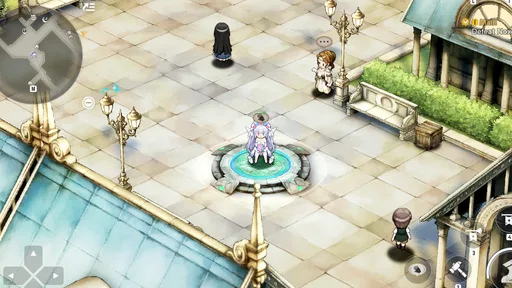
The first thing that stood out to me was the way the game treats its world as more than a menu between battles. Its role-playing structure is built around traveling through areas, meeting characters, following story developments, and then preparing for the next fight. The result feels closer to a compact adventure series than to a battle screen with decorative dialogue attached.
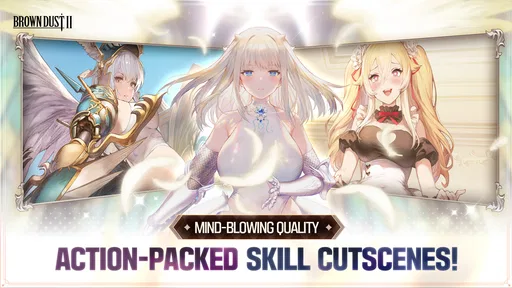
The visual direction does a lot of work. Character designs are expressive, scenes are colorful, and the overall style has enough personality to make the cast memorable. I found myself paying more attention to conversations because the characters are presented with a sense of drama and theatricality. That does not mean every scene will appeal to every player, but it gives the game a stronger identity than many interchangeable character-collection titles.
The mature 17+ rating is important before installing it. The tone is not aimed at children, and some character presentation and story material can feel deliberately provocative. I would not hand this to a younger player simply because the artwork looks polished or because the combat is turn-based. Adults who enjoy darker or more suggestive fantasy presentation may find the approach appealing, while others may consider it distracting or excessive.
The game is free to start, which makes trying it straightforward. Its optional purchases range from $0.99 to $89.99 per item, so I would approach the economy carefully rather than treating every attractive offer as part of the normal adventure. The best way to enjoy it, in my experience, is to decide early whether I am playing for the story and experimentation or chasing every possible character and upgrade.
Combat rewards preparation more than frantic tapping
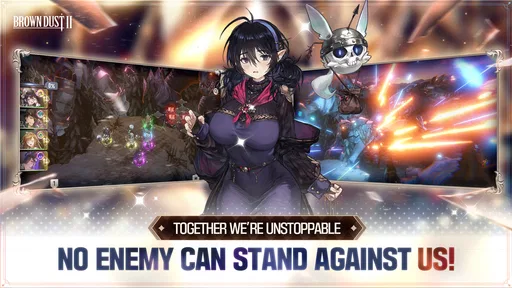
Its battles are a good match for players who prefer thinking before acting. Instead of relying on reflexes, I look at the opposing formation, consider attack order, and decide how to spend each character’s opportunity. Positioning and timing matter because a strong move used at the wrong moment can leave the rest of the team exposed or waste a chance to remove a dangerous enemy.
That slower pace is one of the game’s strongest advantages. I can play while traveling or during a short break without needing constant hand movement. At the same time, the system is not completely passive. When a fight becomes difficult, simply repeating the same actions usually is not enough. I need to examine the team, adjust the order of attacks, and sometimes rethink which characters are worth bringing.
A useful habit is to treat the first attempt at a difficult encounter as information gathering. Rather than spending resources immediately, I watch which opponent acts first, which target survives my opening attack, and whether my damage is spread too widely. On a second attempt, I can concentrate attacks more intelligently. This small workflow saves resources and makes losses feel more educational instead of merely frustrating.
I also recommend maintaining more than one practical team arrangement. A single favorite group may carry ordinary encounters, but specialized opponents can expose its weaknesses. Keeping a second arrangement ready for different damage needs or enemy patterns reduces the temptation to spend impulsively whenever progress slows. That is a more sustainable approach than trying to make every character equally powerful.
Story progression gives the collection systems a purpose
Many games in this space can make collecting feel like the entire point. Here, the adventure structure gives those decisions more context. New characters are not only numbers on a roster; they become part of the way I think about upcoming encounters and the kind of party I want to use. Even when I do not obtain a preferred character, the act of comparing options can still be interesting.
The story also benefits from being broken into manageable pieces. I can complete a small portion, stop, and return later without needing a long uninterrupted evening. That makes it suitable for a realistic routine: after work, I might clear a few encounters, read the next story segment, improve one character, and close the game before the session becomes a commitment.
However, the same structure can create friction. Players who want a single, tightly paced campaign may find the surrounding systems interrupt the dramatic flow. There are moments when I would rather continue the narrative, yet I need to consider upgrades, resources, or a tougher encounter first. That pause is normal for a collection-focused RPG, but it can weaken the momentum for anyone who values story above optimization.
The most useful way to manage progression
I get better results when I spend resources with a narrow plan. Instead of upgrading every new character as soon as they arrive, I choose a core group and improve it consistently. This does not mean ignoring the rest of the roster; it means avoiding a shallow spread of investment that leaves several characters underpowered when a demanding battle appears.
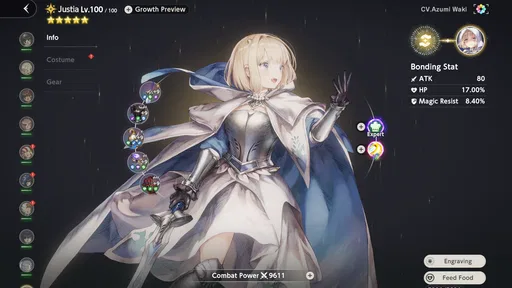
I also suggest reading ability descriptions carefully instead of judging characters only by rarity or appearance. A less exciting-looking option may solve a specific problem more efficiently than a favorite who does not fit the encounter. In a game with turn-based planning, the value of a character comes from how that character works with the rest of the formation, not from isolated strength.
Before spending premium currency, I would play enough to understand the rhythm of the game. It is easy to mistake early excitement for a permanent need. After I know which roles I actually enjoy using, purchases become easier to evaluate. If the goal is simply to experience the adventure, patience is usually more valuable than trying to build the perfect roster immediately.
Where the experience becomes demanding
I find that the challenge here is less about reacting quickly and more about making deliberate choices before a fight: which characters to invest in, how to arrange a team, and whether a setback calls for a new plan rather than more upgrades. I’d treat difficult encounters as a reason to pause and reassess, not as a signal to spend. That makes it easier to see whether this kind of hands-on progression is part of the appeal or the point where another RPG would suit me better.
The free-to-play balance requires self-control
The largest limitation is not the basic combat; it is the pressure created by collection and progression. A roster-driven RPG naturally encourages me to want more characters, stronger versions, and faster improvement. Because the game is free to download but includes paid items, I need to keep a clear boundary between optional convenience and genuine necessity.
I would not describe the game as ideal for players who dislike any form of monetization. Even if I choose not to buy anything, the presence of purchase options can affect how I think about progress. Someone who wants every release or expects to stay competitive with the most dedicated community members may find the experience expensive or stressful. For a relaxed story-focused player, the better approach is to accept that some goals will take longer.
There is also a learning curve in understanding what deserves attention. New players can easily spend time improving the wrong characters, overlook useful combinations, or repeat difficult content without changing their approach. The game rewards curiosity, but it does not always make the best decision obvious. I see that as a meaningful weakness because a polished presentation may lead newcomers to expect a simpler experience than the underlying systems provide.
Its style will not suit every role-playing fan
The attractive character art is central to the identity of the game, but it is also a dividing line. Players who prefer restrained fantasy design, realistic characters, or a less suggestive presentation may be uncomfortable with its direction. The mature rating is not a minor footnote; it should influence the installation decision, especially in a family setting.
The game may also disappoint people who want real-time action. Battles are built around planning rather than direct movement and rapid reactions. I enjoy that because it lets me think, but someone coming from an action RPG may find the encounters too controlled. In that case, a real-time alternative would provide a better sense of physical involvement, even if it offered less room for careful turn-by-turn planning.
On the other hand, fans of traditional turn-based role-playing games may find the structure more approachable than a large console-style adventure. It is easier to fit into a short routine, and the character-building layer gives longer-term goals without requiring every session to last for hours. The trade-off is that mobile-friendly pacing comes with more menus and a stronger connection between progress and roster management.
How it fits into an everyday gaming routine
Imagine I have twenty minutes before leaving for an appointment. I can open the game, review a team, clear a few encounters, and stop without losing the entire evening. That is where it works best for me. The combination of story segments and turn-based battles gives a short session a sense of completion, provided I am not in the middle of a demanding chapter or trying to reorganize the whole roster.
For a longer weekend session, the experience changes. I can spend more time experimenting with teams and following the story, but the collection systems become more noticeable. Repeating tasks, comparing upgrades, and deciding where resources should go can occupy as much attention as the adventure itself. I enjoy that planning occasionally, though I would not want every game session to become an inventory-management exercise.
A practical routine is to separate story play from maintenance. I first complete the content I actually want to experience, then use a short second session for upgrades and roster decisions. This prevents menus from swallowing the time I intended to spend with the narrative. It also makes it easier to notice whether I am still enjoying the game or merely responding to a list of available improvements.
Who should install it, and who should skip it?
I think it is a strong match for adults who like anime-styled fantasy, collectible characters, turn-based tactics, and story delivered in compact portions. It is especially appealing if I enjoy testing team combinations rather than relying on one permanent lineup. The visual presentation gives the adventure a clear personality, while the battles offer enough planning to keep routine encounters from feeling completely automatic.
I would recommend skipping it if I want a child-friendly game, a purely offline-style campaign, or a completely frictionless progression path. It is also not my first recommendation for someone who dislikes character collection and paid-item economies on principle. A conventional premium role-playing game may be a better fit for that player, even if it offers fewer ongoing updates or less roster variety.
Compared with a straightforward action RPG, this game gives up immediate control in exchange for deliberate decisions. Compared with a simple idle or auto-battle title, it asks me to engage more actively with formations and abilities. Compared with a large traditional role-playing game, it offers a more manageable mobile routine but a less unified sense of adventure. Those trade-offs explain its appeal more accurately than calling it merely a beautiful RPG.
The technical entry point is fairly accessible for supported devices: it runs on Android 8.0 or later. That does not guarantee identical performance on every phone, so I would still keep expectations sensible on older hardware. The current version is 2.33.15, and the game’s large audience suggests that it has found a substantial mobile player base, with more than a million installs and an average rating of 3.7 from roughly 126 thousand ratings.
My final recommendation
After spending time with it, I see BrownDust2 - Full Burst RPG as a stylish, systems-focused adventure rather than a casual game that happens to contain battles. Its best qualities are the expressive presentation, the compact story sessions, and the satisfaction of solving encounters through preparation. I especially like that a difficult fight can often be approached as a puzzle instead of a demand for faster reactions.
Its weaknesses are equally clear. The mature presentation narrows its audience, the progression economy calls for restraint, and the number of decisions can overwhelm players who simply want to follow a story. The game becomes more enjoyable when I accept that I do not need to collect everything or upgrade everyone immediately.
My verdict is favorable for the right player. I would install it free of charge to sample the opening experience, then decide whether its character collection and progression loop fit my habits before spending anything. If I wanted a thoughtful mobile RPG with a distinctive visual identity and enough tactical depth for repeated sessions, I would give it a serious try. If I wanted a self-contained, purchase-once adventure with no roster pressure, I would choose a different kind of role-playing game instead.
Verdict
Strengths of BrownDust2 - Full Burst RPG
- Strategic combat rewards careful team composition and turn planning.
- Frequent events provide new stories, costumes, and limited-time challenges.
- Distinct character costumes give heroes varied skills and battle roles.
- Story chapters offer engaging dialogue and memorable visual-novel presentation.
- Auto-battle and repeat options make routine farming more convenient.
Limitations of BrownDust2 - Full Burst RPG
- High-quality costumes and characters can make progression feel pay-to-win.
- Limited-time banners may pressure players to spend or save resources carefully.
- Daily tasks and farming can become repetitive after extended play sessions.
- Large updates may require considerable storage space and download time.
- The mature fan-service style may not appeal to every player.
Other Releases by NEOWIZ
View All
Cats&Soup: Relaxing Cozy Games
Simulation4.6

Cats&Soup : Merge Magic Recipe
Casual4.7
Similar Picks in This Category
View All
Hair Dye
CrazyLabs LTD4.4

Monster High™ Beauty Salon
CrazyLabs LTD4.5

Bus Simulator - Bus Games 3D
Jima Apps4.4

Flight Pilot: 3D Simulator
Wildlife Studios4.1


Super Stylist Fashion Makeover
CrazyLabs LTD4.4
Frequently Asked Questions
What is BrownDust2 - Full Burst RPG?
BrownDust2 - Full Burst RPG is a story-driven mobile role-playing game with turn-based battles, collectible characters, tactical skills, and several adventure packs to explore. It combines classic pixel-inspired visuals with modern character designs, dialogue-heavy campaigns, and strategic combat. Players form teams, improve mercenaries, collect equipment, and progress through different stories rather than simply repeating one linear quest.
Is BrownDust2 free to play, and does it include in-app purchases?
Yes, BrownDust2 can be downloaded and played for free, but it includes optional in-app purchases. These may provide premium currency, recruitment opportunities, costumes, upgrade materials, or other convenience-related items. You can experience the main content without paying, although progression and character collection may feel slower for free players. It is worth checking the store settings and setting a spending limit before buying anything.
Does BrownDust2 require an internet connection?
BrownDust2 generally requires an active internet connection because it communicates with the game servers, verifies account information, downloads content, and manages events and purchases. It is therefore not a reliable choice for completely offline play. A stable Wi-Fi or mobile-data connection is recommended, especially when downloading additional files or participating in online features, since interruptions may cause loading problems or failed connections.
Is BrownDust2 suitable for beginners?
BrownDust2 is accessible to newcomers, but its combat system rewards careful planning. Positioning, attack order, skill range, knockback effects, elemental advantages, and team composition can all influence the result of a battle. The early stages introduce these mechanics gradually, while later encounters become more demanding. New players should read skill descriptions, upgrade a balanced group, and avoid spending valuable resources too quickly.
What devices and storage space are needed to play BrownDust2?
BrownDust2 is designed for relatively modern Android and iOS devices, but the exact compatibility depends on the operating-system version and the hardware supported by the current release. The initial download is only part of the requirement because additional voice, story, and update files may be installed afterward. Keep several gigabytes of free storage available, use a stable connection, and update your device before playing for the best experience.
Play our best games!


